Situation: Lithia Motors required a standardized approach to understanding and addressing customer behaviors and needs across various stakeholder groups. There was an absence of a unified structure for creating personas, which are crucial in developing targeted, user-centric design strategies.
Task: My task was to design a comprehensive persona template that could be utilized by multiple departments within Lithia Motors. The objective was to encapsulate essential user information and motivations in a structured format to guide product development and customer engagement strategies effectively.
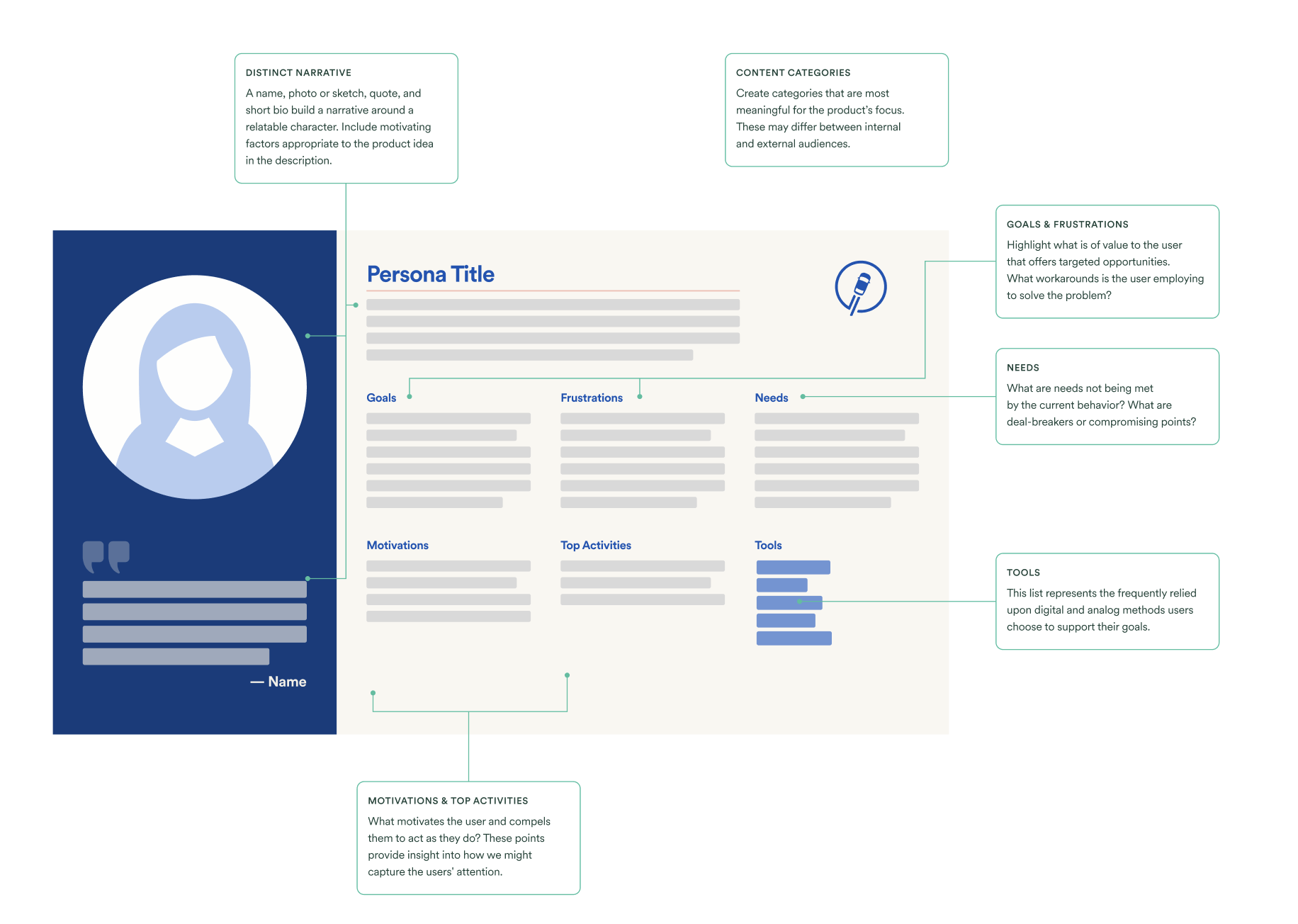
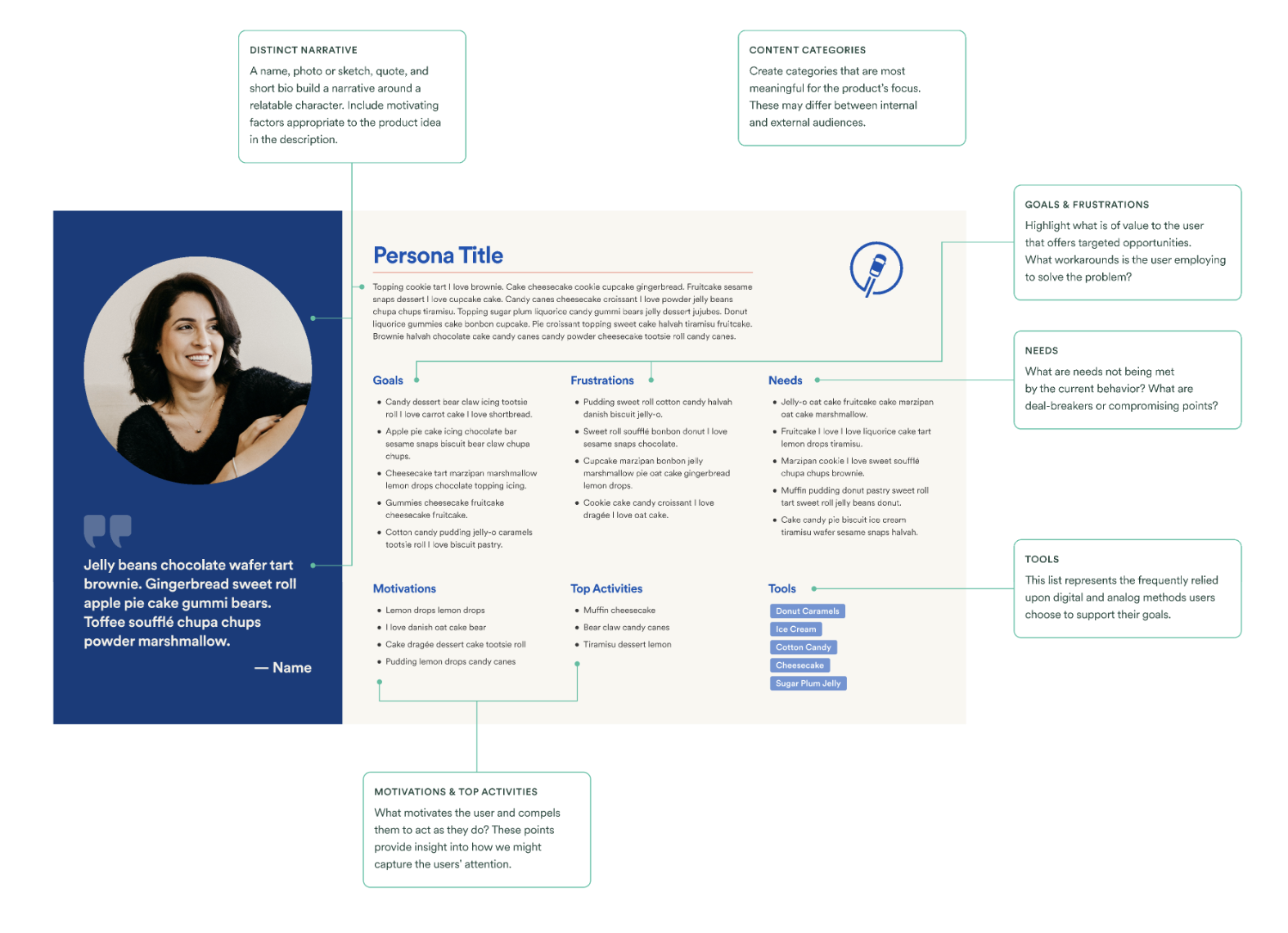
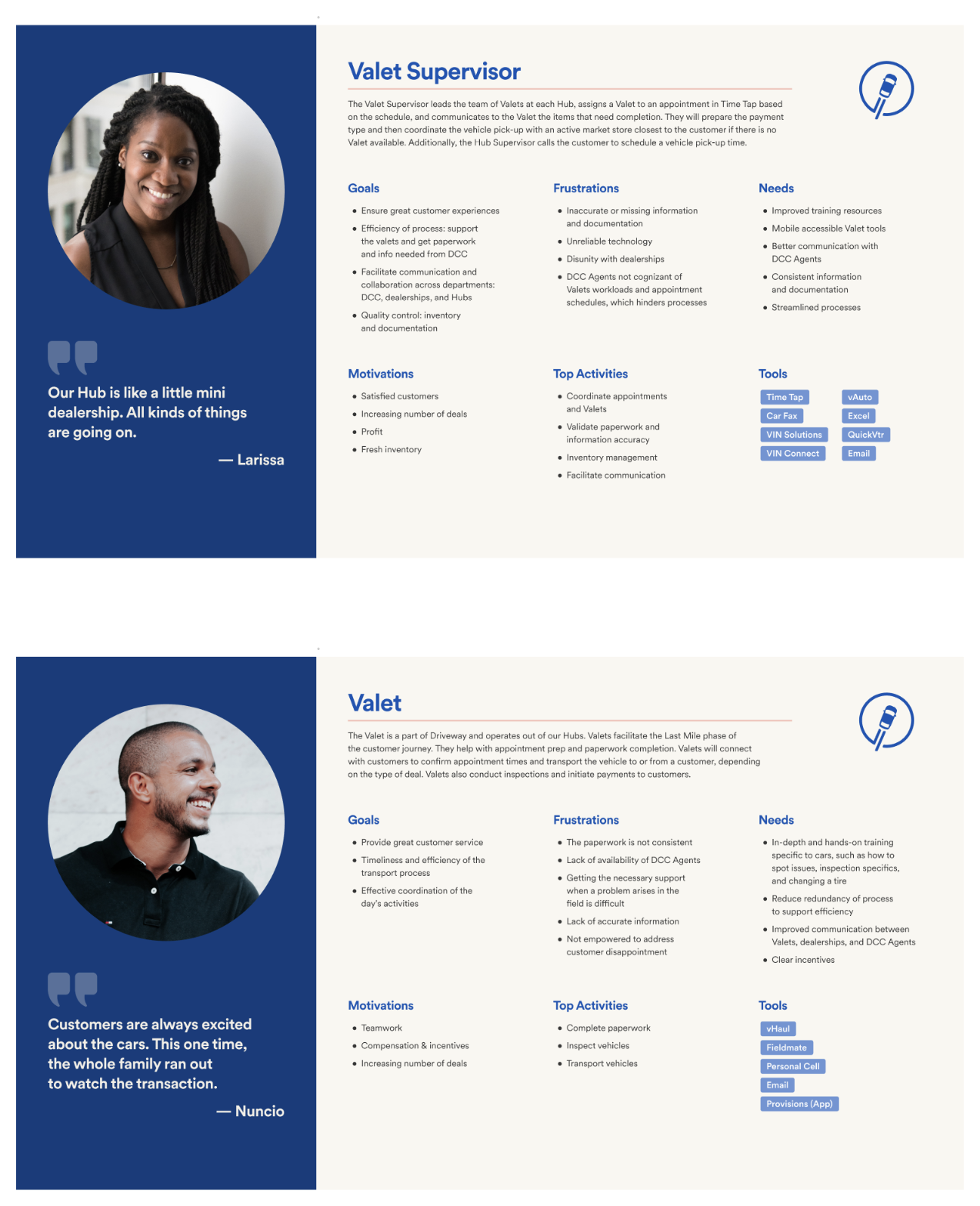
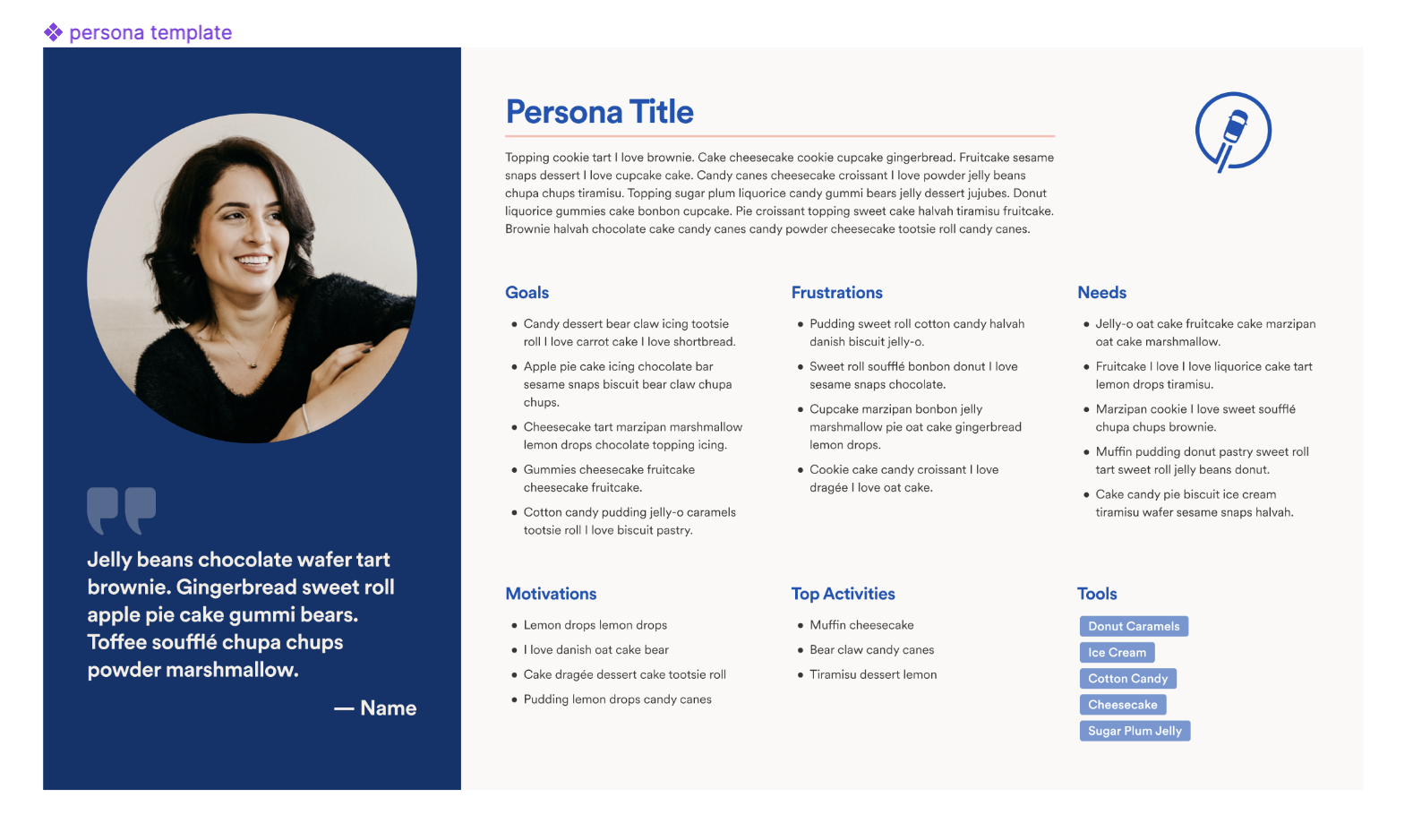
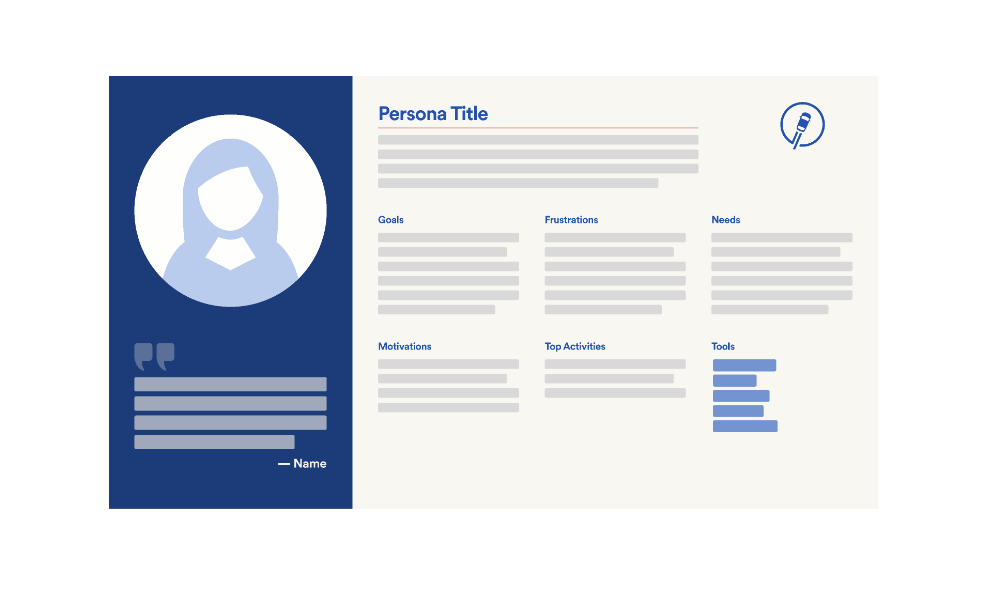
Action: I initiated the project by conducting extensive research to identify the key attributes and data points that were most impactful for persona development. This involved collaborating with stakeholders from sales, marketing, and product teams to gather insights and establish the core 'why' behind each persona attribute. I then designed a persona template that could distill complex user data into accessible, actionable insights. The template was built to be flexible yet comprehensive, accommodating a wide array of user types while also providing a clear guide on how to use it effectively.
Result: The persona template was adopted across various teams at Lithia Motors, leading to a more cohesive and empathetic approach to user experience design. It allowed teams to quickly align on the user needs and objectives, streamline communication, and make informed decisions. The consistent use of this template resulted in a deeper and more systematic understanding of our customers, which not only improved the design process but also enhanced the overall effectiveness of our customer engagement and product development efforts.
About
Personas summarize and communicate research findings, depicting the hypothesized user and aligning the team by providing a consistent and shared understanding of the users' values and needs.
Use personas during ideation or when evaluating design to give stakeholders
and the product team an empathetic sense of the end users' needs, goals, and motivations, making the product more "user friendly."
Guidance
Collect rich information and insights about your users through research
such as interviews and observations.
Uncover behavioral patterns, themes, commonalities, particularities,
and differences.
Group users based on similarities and build the archetype representing
that specific cluster.
Select characteristics that are most representative of your target group and most relevant to your project
Include primary responsibilities and goals of the persona
Fit each persona within a single concise artboard to ensure a good overviewGive each persona a name
Use a picture of a person to represent the persona
Add demographics such as age, education, job, and family status, but choose particular characteristics with care; demographic details and user goals aren't necessary unless they are essential to the product. "Don't confuse persona archetypes with stereotypes." — Alan Cooper
Exploded View